
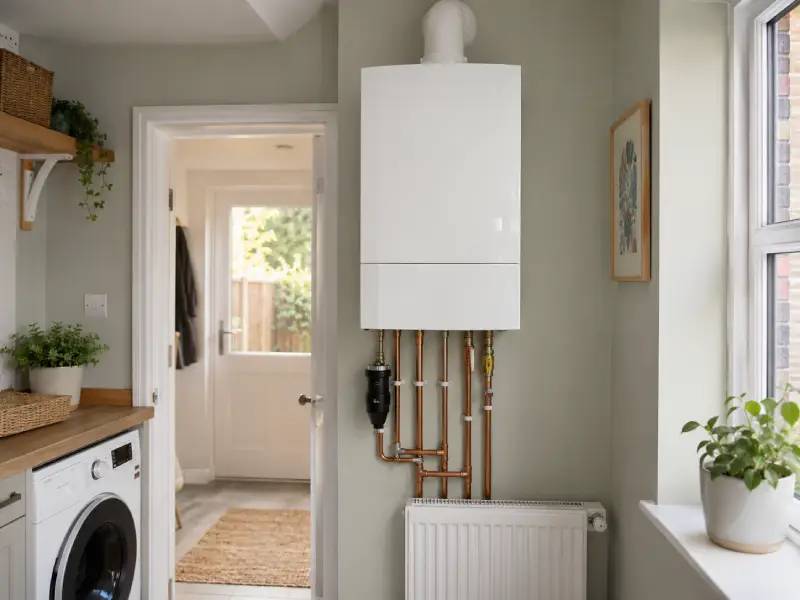
Choosing the right boiler size is one of the most critical decisions you will make for your home’s infrastructure. It directly affects your daily heating comfort, the performance of your hot water, your monthly energy bills, and the long-term reliability of the unit itself.
When we talk about boiler size we aren’t usually referring to the physical dimensions of the unit – modern engineering has made most boilers quite compact. Instead, we are talking about the output in kilowatts (kW), which represents the boiler’s power and its ability to meet your home’s heat and hot water demands.
London homes vary significantly in their requirements. From studio flats in modern developments to sprawling Victorian terraced houses, converted apartments, and Houses in Multiple Occupation (HMOs), the South London housing stock is incredibly diverse. Each property type requires a unique assessment to ensure the system isn’t underpowered (leading to cold showers) or overpowered (leading to wasted energy and higher bills).
Main types of boilers in UK homes
Combi boilers
Combi boilers provide central heating and hot water from one compact unit, without a separate hot water cylinder. They are a popular choice for many London flats and smaller houses where space is limited.
However, combi boiler performance depends heavily on mains water pressure and flow rate. Worcester Bosch advises that, before or during installation, the water main should be able to deliver enough water to the boiler while other cold outlets are in use, such as taps, toilets or washing machines.
This means a combi boiler’s kW rating is often driven more by hot water demand than by heating demand. A small flat may not need much heat output, but if the occupants want a strong shower, the boiler still needs suitable hot water performance.
System boilers
System boilers work with a separate hot water cylinder. They are often a good option for homes with more than one bathroom or higher simultaneous hot water use.
In South London, system boilers can be suitable for larger family houses, converted properties, homes with ensuites, and rental properties where several people may use hot water at similar times.
Regular / conventional boilers
Regular boilers, also called conventional or heat-only boilers, are common in older UK homes with existing tanks and cylinders. They may be suitable where a like-for-like boiler replacement is more practical than converting the entire heating system.
A professional survey should decide whether your home should keep the same system type or upgrade to a combi or system boiler.
Quick boiler size guide by property type
Note: This is an approximate guide. Always consult a professional before purchasing.
Small flat or 1–2 bedroom home: Typically requires a smaller combi boiler (24–27kW). These properties usually have one bathroom and a limited number of radiators, meaning heat demand is relatively low.
2–3 bedroom house: Often requires a medium-output combi (28–34kW) or a system boiler (18–24kW). This takes into account a higher number of occupants and the potential for a bath and a separate shower.
3–4 bedroom family home: Usually needs a high hot water capacity (35–42kW for a combi). In many cases, a system boiler is more suitable here to ensure that multiple bathrooms can function simultaneously without a drop in pressure.
Large house, HMO or property with multiple bathrooms: These properties require a detailed heat-loss calculation. They almost always require a system or regular boiler with a high-capacity cylinder. South London landlords managing HMOs should also prioritize a regular boiler service and boiler safety check to ensure the system handles the high demand of multiple tenants safely.
While boiler size can be estimated by the number of bedrooms and radiators, a tailored survey is the only way to get a truly accurate recommendation for your specific lifestyle.
What factors affect boiler size in London homes?
Property age and insulation
South London is famous for its Victorian and Edwardian architecture. While beautiful, these older terraces can lose heat rapidly if they haven’t been upgraded with modern insulation. Conversely, a new-build flat in a development may have a very low heating demand but still require a high-output boiler to provide a luxury rainfall shower experience. We factor in your loft insulation, double glazing, and draught-proofing when calculating the kW you need.
Number of bathrooms and showers
This is the biggest factor for combi boilers. A small 24kW combi might struggle if one person is doing the washing up while another is in the shower.
One bathroom + kitchen sink: Standard combi is fine.
Two bathrooms: High-output combi or a system boiler.
Ensuite + family bathroom: System boiler recommended.
Rental property with multiple occupants: System boiler for reliability and simultaneous use.
Number of radiators
The more radiators you have, the more energy is required to circulate hot water through the system. When contacting us, it’s helpful to have a count of your radiators ready, as this forms the baseline for your space-heating requirements.
Water pressure and flow rate
In some parts of London, especially in converted houses or upper-floor flats—water pressure can be an issue. An installer must test your mains pressure before recommending a combi boiler. If the flow rate is low, a combi will perform poorly regardless of its kW rating, and a different system might be necessary.
Why a professional boiler survey is essential
While online calculators provide a starting point, they cannot replace an in-person assessment by a Gas Safe registered engineer. A professional survey involves checking:
The current boiler type, age, and flue position.
Existing pipework and gas supply adequacy.
Mains water pressure and flow.
The number of radiators and the property’s specific heat loss.
Your household’s typical hot water usage.
A professional survey can help prevent oversizing, undersizing and avoidable boiler repair costs. It also helps ensure the boiler, flue and controls are suitable for the property.
Boiler sizing and energy efficiency
The right size boiler can help reduce wasted energy and improve comfort. Modern heating controls, room thermostats and thermostatic radiator valves can also help you manage heating more efficiently.
Energy Saving Trust explains that replacement boiler costs vary depending on the setup and highlights replacing an older boiler with an A-rated condensing boiler and thermostatic radiator valves as a typical modern upgrade route.
Correct sizing matters because an oversized boiler may cycle on and off more often, while an undersized boiler may run hard and still fail to meet demand. The best result comes from matching the boiler to the home, the heating system and the way people actually use hot water.
Book a boiler service – Green London Plumbers
Green London Plumbers provides local plumbing and heating support across South London for homeowners, landlords and property managers.
Our team can help you understand whether your property needs a combi, system or regular boiler. We can assess your radiators, water pressure, hot water demand and future plans before recommending the right solution.
Contact Green London Plumbers today to book a boiler assessment in South London.
FAQs
Yes. An oversized or undersized boiler can operate inefficiently, reduce comfort and lead to avoidable wear. Correct sizing helps support better performance and long-term reliability.
Yes. Landlords must arrange an annual gas safety check for gas appliances and flues by a suitably qualified Gas Safe registered engineer.
Many three-bedroom houses use a medium-output combi boiler or a system boiler. The right choice depends on the number of bathrooms, radiators, occupants and mains water flow rate.
Not always, but it may be more hot-water capacity than some flats need. For a combi boiler, the kW rating is often linked to shower and hot water performance, so water flow rate must be checked before deciding.