
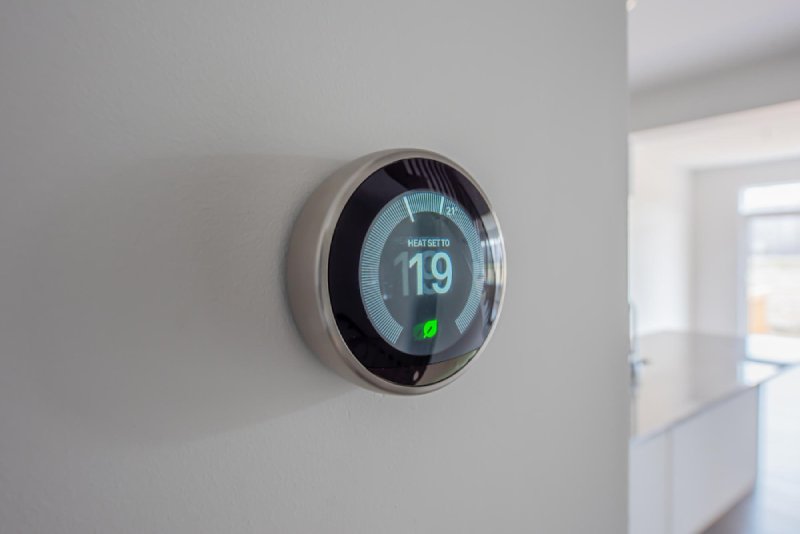
While the Google Nest remains the most recognisable name in smart central heating, it is increasingly clear that it isn’t always the ideal fit for every UK household. For many homeowners in South London the approach that made Nest famous can often feel like a limitation rather than a feature.
Choosing the right alternative means looking beyond the aesthetics and focusing on the specific needs of your property. Whether you need better heating maintenance or a complete system overhaul, understanding your options is the first step toward a more comfortable home.
Why people look for an alternative to Nest
Most people do not switch because they dislike Nest’s design. They switch because they want clearer day-to-day control. Some want each room to behave differently. Some want a schedule that simply follows instructions. Others need a thermostat that suits a combi boiler, a system boiler with stored hot water, or smart radiator control. And for many households, the best replacement is the one a local engineer can install, explain and support easily as part of ongoing heating services, not the one with the biggest brand name.
Common reasons for the switch include:
- Precision Zoning: South London homes often suffer from uneven heating across different floors. Alternatives like Tado° or Honeywell evohome allow for zoning, which simply means dividing your home into different areas that can be heated at different temperatures and times.
- Simpler Scheduling: Nest’s signature learning behaviour can be a double-edged sword; many users find it frustrating when the thermostat changes temperatures unexpectedly. Systems like Honeywell or Hive focus on predictability, ensuring that schedules run exactly as programmed without smart overrides.
- British Hardware Compatibility: Property owners look for hardware that offers a better fit for British heating components like combi boilers, hot-water cylinders, or radiator zoning.
- Professional Support: Many homeowners prefer a brand that their local heating services provider can install and support easily. With Google phasing out support for older Nest generations, switching to these alternatives provides a more future-proof and stable solution.
What to check before choosing your new thermostat
When choosing a smart thermostat in the UK, the focus shifts from U.S.-style electrical wiring toward boiler compatibility and modulation standards like OpenTherm. OpenTherm is a digital language that allows your thermostat and boiler to talk to each other more effectively, instead of just turning the boiler fully “on” or “off,” it tells the boiler to vary its heat output (modulate) to maintain a steady temperature, which saves energy.
Before selecting your alternative, evaluate these technical factors:
- Boiler Type: Do you have a combi boiler (provides heating and instant hot water) or a system/regular boiler (with a separate hot-water tank)?
- Hot-Water Control: If you have a separate cylinder, you need a thermostat that offers hot-water control, allowing you to set separate schedules for your taps and showers.
- Smart Radiator Valves: If you want to stop heating empty bedrooms while keeping the lounge cosy, you’ll want a system that supports smart radiator valves. These replace the old twist-heads on your radiators, allowing the thermostat to control the temperature of individual rooms.
- Modulation: Check if your boiler supports OpenTherm. Using a thermostat that supports this standard can significantly improve your heating efficiency compared to a basic on/off switch.
The best Nest alternatives on the British Market
tado° Smart Thermostat X
tado° Smart Thermostat X is one of the strongest all-round Nest alternatives for UK homes. The current wireless kit sold in Britain supports hot-water control, works with most gas boilers and many heat pumps, and supports Relay or OpenTherm. It becomes especially useful when paired with tado° smart radiator thermostats, because you can start with one thermostat and build towards proper room-by-room control later. Best for homeowners who want polished app control and a future-ready upgrade path.
Hive Thermostat / Hive Thermostat Mini
Hive remains the mainstream UK choice because it is easy to understand. Both Hive thermostat models offer app control for heating and hot water, straightforward scheduling, and expansion with smart radiator valves for room-by-room control. For many households, that familiarity matters: it is simple, recognisable, and often easier to explain and support after installation.
Honeywell Home T6R
The Honeywell Home T6R is the solid traditional controls brand alternative. It offers app control, geofencing, flexible 7-day scheduling, and compatibility with 24–230V on/off and OpenTherm appliances including gas boilers, combi boilers and heat pumps. Hot-water variants are also available, which makes it a very sensible choice for homes with stored hot water as well as standard central heating. Good for households that want smart features without a flashy or over-complicated system.
Drayton Wiser
Drayton Wiser is one of the strongest UK-specific alternatives. You can start with a combi-boiler kit, move to multi-room kits, add radiator thermostats for more zones, and even bring electric or mixed heating into the same app with Wiser’s electrical heat switch. It suits practical homeowners who want to improve their system in stages rather than replace everything at once.
Netatmo Smart Thermostat / Smart Modulating Thermostat
Netatmo is the slightly less mainstream but very tidy option. Its standard thermostat offers remote control, smart scheduling and consumption tracking, while the Smart Modulating Thermostat is designed for compatible OpenTherm boilers and can also handle domestic hot water on supported systems. It is worth considering for homeowners who want a neat interface, clear app data and an OpenTherm-friendly setup without going down the usual big-brand route.
Installation and compatibility matter as much as the thermostat
Boiler type always comes first. A combi boiler, a stored-hot-water system and a heat pump all need different control logic, and older South London properties often need extra care around receivers, existing programmers and zoning. Professional fitting helps avoid wiring mistakes, keeps the control strategy matched to the boiler, and makes sure smart radiator valves are part of the same overall setup rather than random add-ons.
Repair the Nest or replace it?
Sometimes a Nest fault is not really a Nest fault. In UK installations, the issue may be with the Heat Link, wiring, receiver position or boiler controls.
If the thermostat is a newer model and the problem is isolated, repair may still make sense. But if you have an older 1st- or 2nd-generation Nest that lost app support after 25 October 2025, replacement is usually the smarter long-term choice. And if your house would benefit from zoning, a like-for-like swap can be a missed opportunity.
Upgrading the controls can deliver better value than repairing an old single-point setup. That is also why proper heating maintaineance and support should look at the whole control system, not only the wall thermostat.
FAQ
Do I need a heating engineer to install a replacement for Nest?
While some kits are marketed as DIY, we highly recommend professional installation in South London. UK boiler systems involve high-voltage wiring, and a professional ensures your central heating remains safe and compliant with local regulations.
For most UK homes, tado° Smart Thermostat X and Honeywell Home T6R are the closest direct alternatives because they combine app control, boiler compatibility and modern scheduling in a British-friendly setup.
For strong room-by-room control, Honeywell evohome, Drayton Wiser, Hive and tado° all support radiator-based zoning well. evohome is especially strong in larger homes.
Some can, but not all setups are equal. tado° Smart Thermostat X, Honeywell T6/T6R and evohome all reference heat-pump compatibility, so the exact model and control method should be checked first.